


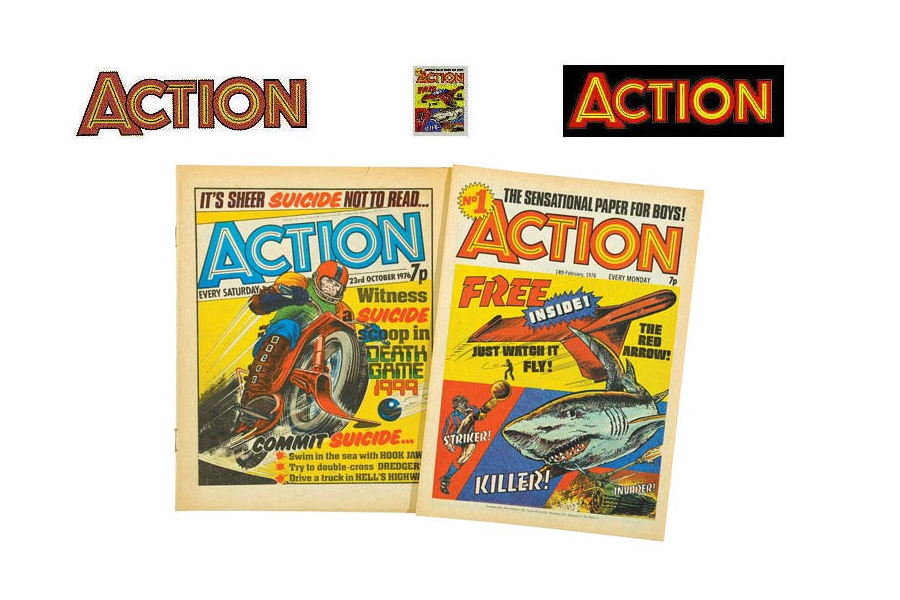
First Issue: 14th February 1976
Last Issue: 12th November 1977
Copyright: IPC Magazines
Hookjaw
With the appearance of Punk Rock music and the rise in radical trade unionism, Britain in the 1970’s was a ferment of revolutionary discourse which fostered a desire to test social boundaries in a way never seen before. The questioning of contemporary norms and values was not just confined to the areas of politics, fashion and music but the humble British comic also.
Action comic made its appearance on 14th February 1976. Although its appearance coincided with Valentines Day, there was no love affair between Action comic and the media. However, the target audience, the children, loved it. Action story lines borrowed heavily from Hollywood, especially films like Jaws where people would be decapitated or lose limbs. The Action editorial team, John Sanders, Pat Mills and Geoff Kemp, created a comic with the same sort of shock factor as the Hollywood films that were bringing in millions of dollars at the box office. The children lapped it up, the parents and the newspapers were up in arms.
Dredger
The arrival of Action comic was the result of an evolution in Boys’ comics which had been pre-empted by a small number of its predecessors. A number of comics had begun to move away from the Beano type stories where the sun shined every day and everybody lived happily ever after. Comics such as Warlord (28th September 1974), depicted the grittier side of life, the realities of war and death. Warlord was a great commercial success for DC Thomson and its success led to the publication of Battle Picture weekly (8th March 1975) by their competitors, IPC. Pat Mills was part of the team that produced Battle Picture weekly. The comic was such a huge success that Pat Mills was asked to work on a new comic which was in tune with the mood of the moment, a comic that would push the boundaries, a comic that would move away from the goodies always triumphing over the baddies, a comic from the baddies’ viewpoint, a comic called Action.
Look Out for Lefty!
 Stories such as The Running Man, Dredger and Hookjaw were a creative reworking of Hollywood films and programs and became compulsive reading for the Action fan. Action was different to all the comics that had preceded it, not only did it portray the darker side of life but the stories were viewed through the eyes of the anti-hero. Its graphic portrayal of violence was also in stark contrast to its comic contemporaries. In Roy of the Rovers, Roy Race and Penny Laine were the golden couple who were never seen to do any wrong. In sharp contrast, Action comic’s, Kenny “Lefty” Lampton was a Sixteen year old lad playing football for Wigford Rovers. Lefty managed to score a goal with the aide of his girlfriend Angie, who walloped one of Lefty’s rivals by lobbing a Coca Cola bottle at him. An example of crowd violence at a football match which was more consistent with 1970’s reality than was the Roy of the Rovers’ type storylines.
A British Comic Banned
Such storylines attracted the attention of those outside the comic world. Criticisms from those as diverse and as far apart as the secretary of the Football League, Mary Whitehouse and The Sun Newspaper meant that Action’s days were numbered. Action only lasted lasted 37 issues (36 distributed copies) and it is believed that its run came to an end due to commercial considerations. A number of large retailers refused to stock any of IPC’s stock unless Action comic was withdrawn. Action did return six weeks later (4th December 1976) but in a much more diluted form that was more in keeping with traditional boy’s picture weeklies. The new Action series lasted for 50 unnumbered issues before being incorporated into Battle Picture weekly comic and becoming Battle Action.
2000AD
Many fans believe that Action was reborn as 2000AD (26th February 1977). Pat Mills and many of the artists and writers at Action helped create the new 2000AD comic. Their experiences with Action comic helped create and outline the boundaries for the new comic which has become one of the most successful comics ever.
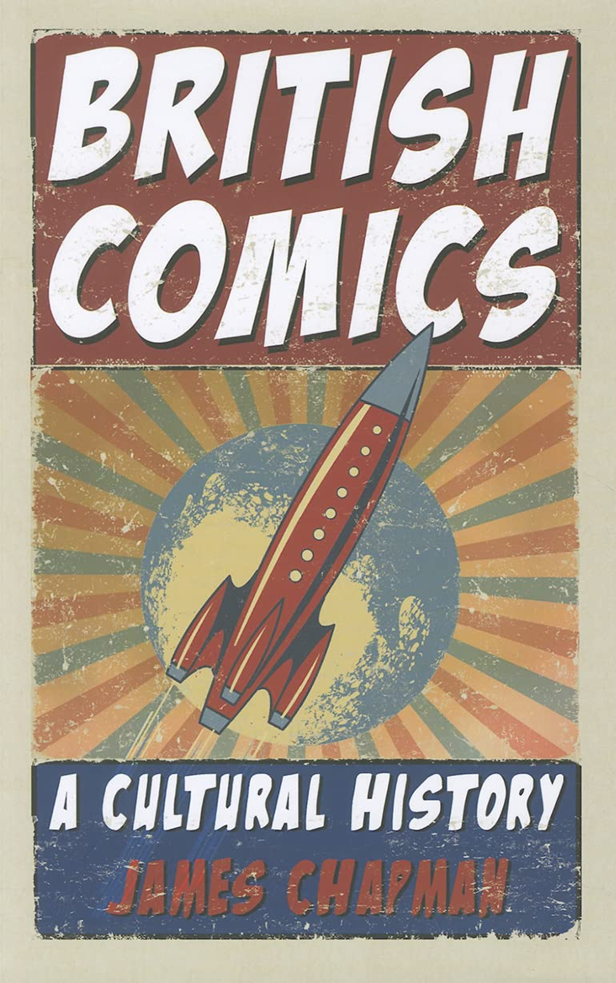
British Comics – A Cultural History
by James Chapman
Buy Here